-
Zeus (Copper)
The technical information contained on this page has been reviewed, verified, and approved by Greg French, CPG, VP Exploration of NevGold. Mr. French is a "Qualified Person" as defined by National Instrument 43-101, Standards of Disclosure for Mineral Projects.
Summary
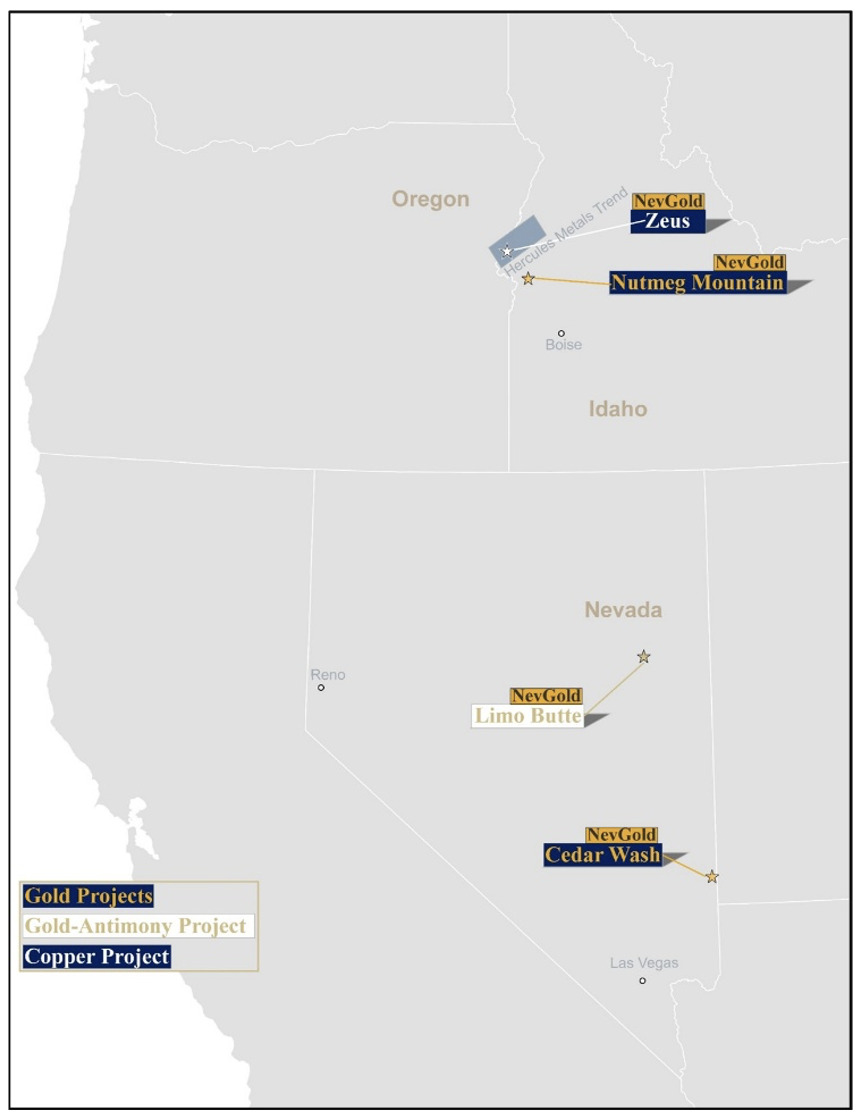
NevGold’s Zeus Copper Project (100% owned) is located in western Idaho approximately 35 kilometers northwest of our Nutmeg Mountain gold deposit (100 % owned). The property benefits from well-maintained historical roads, providing excellent access for exploration activities.

Figure 1 – NevGold properties in the Western USA.
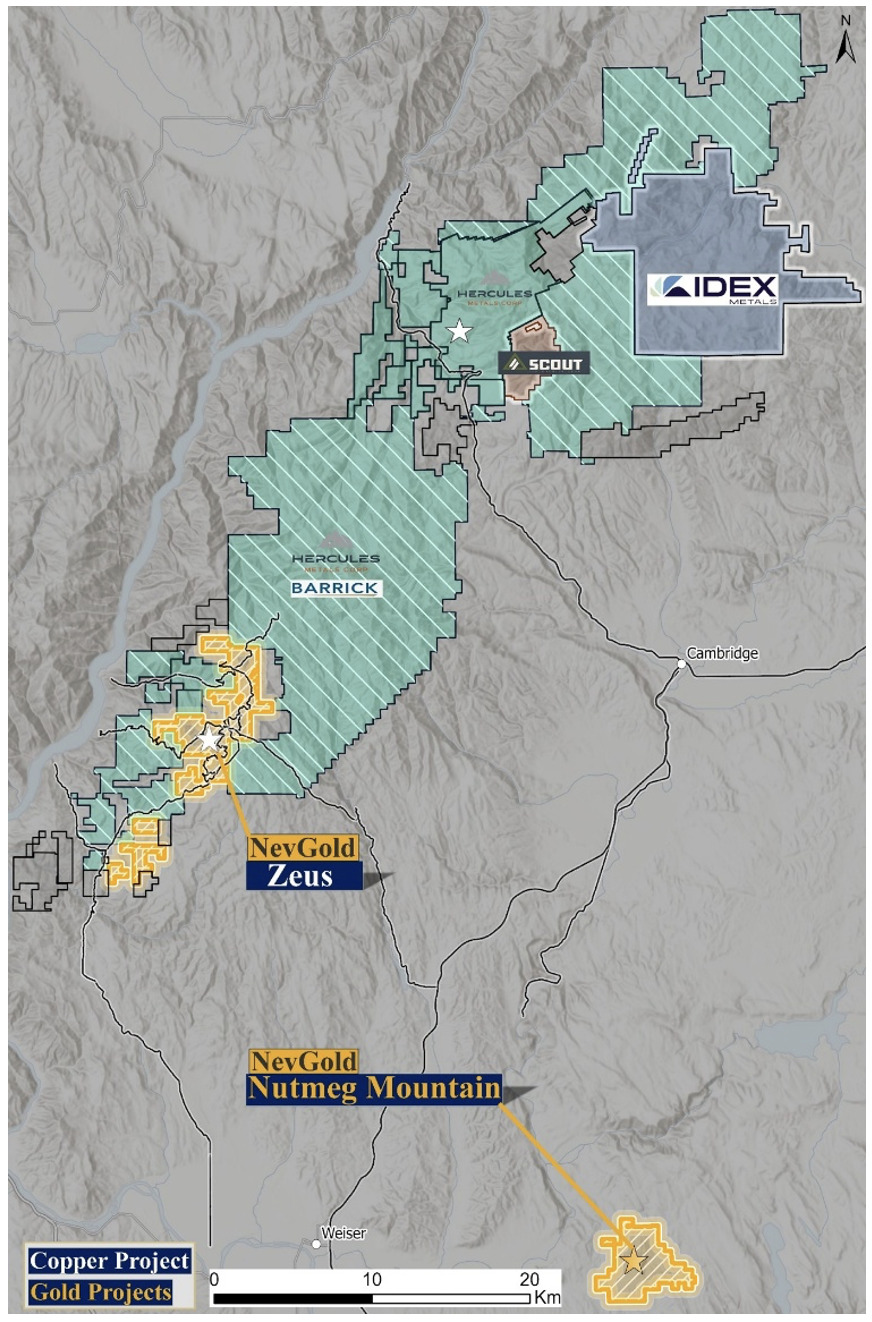
Zeus encompasses 392 claims, approximately 2,900 hectares or 29 square kilometers, of highly strategic and prospective ground on the emerging Hercules Copper Trend. Zeus is underlain by the two primary host rocks of copper mineralization in the Hercules Copper Trend, the Lower Huntington Formation and Triassic age intrusive rocks. Strong similarities are noted between Zeus and the Hercules Metals copper porphyry discovery at the Hercules Project, which is 20 kilometers northeast of Zeus.

Figure 2 – Zeus project location and Hercules copper trend.
Nutmeg Mountain (gold, resource stage) is located approximately 35 kilometers to the southeast.Field programs completed include geological database review, mapping, and surface soil sampling. Ground geophysical surveys are in preparation to identify drill targets.
Zeus Geology
Initial surface soil and rock chip sampling by NevGold combined with historical data has identified multiple high-priority potential copper porphyry targets at the Zeus Copper Project. The results of the soil sampling reveal a multi-kilometer mineralized footprint with potential for multiple copper porphyry intrusive centers, showing tenor and scale analogous to the Hercules Metals copper porphyry discovery at the Hercules Project. The objective at the Zeus Project is the discovery of intrusive rocks with veining and alteration that are indicative of porphyry Cu-Au-Mo mineralization. The company plans to conduct a ground geophysical program including both IP and MT surveys to define drill targets within these anomalous zones.
The Zeus and Hercules Projects are located within the Olds Ferry Terrane, a geological setting analogous to the prolific Quesnell Terrane of British Columbia. The Quesnell Terrane is characterized by Late Triassic to Early Jurassic intrusive complexes that are well-endowed with copper-gold-molybdenum porphyries including Highland Valley Copper (HVC), Mount Polley, Mount Milligan, New Afton and Copper Mountain.
The Thorn Springs and Poseidon Targets at Zeus are underlain by the Early Jurassic-aged Lower Huntington Formation, comprised of andesitic volcanics to volcaniclastics and limestone units that are key hosts for copper mineralization. These units have been intruded by Late Triassic to Early Jurassic-aged intrusive complexes-key hosts for copper-gold-molybdenum mineralization.
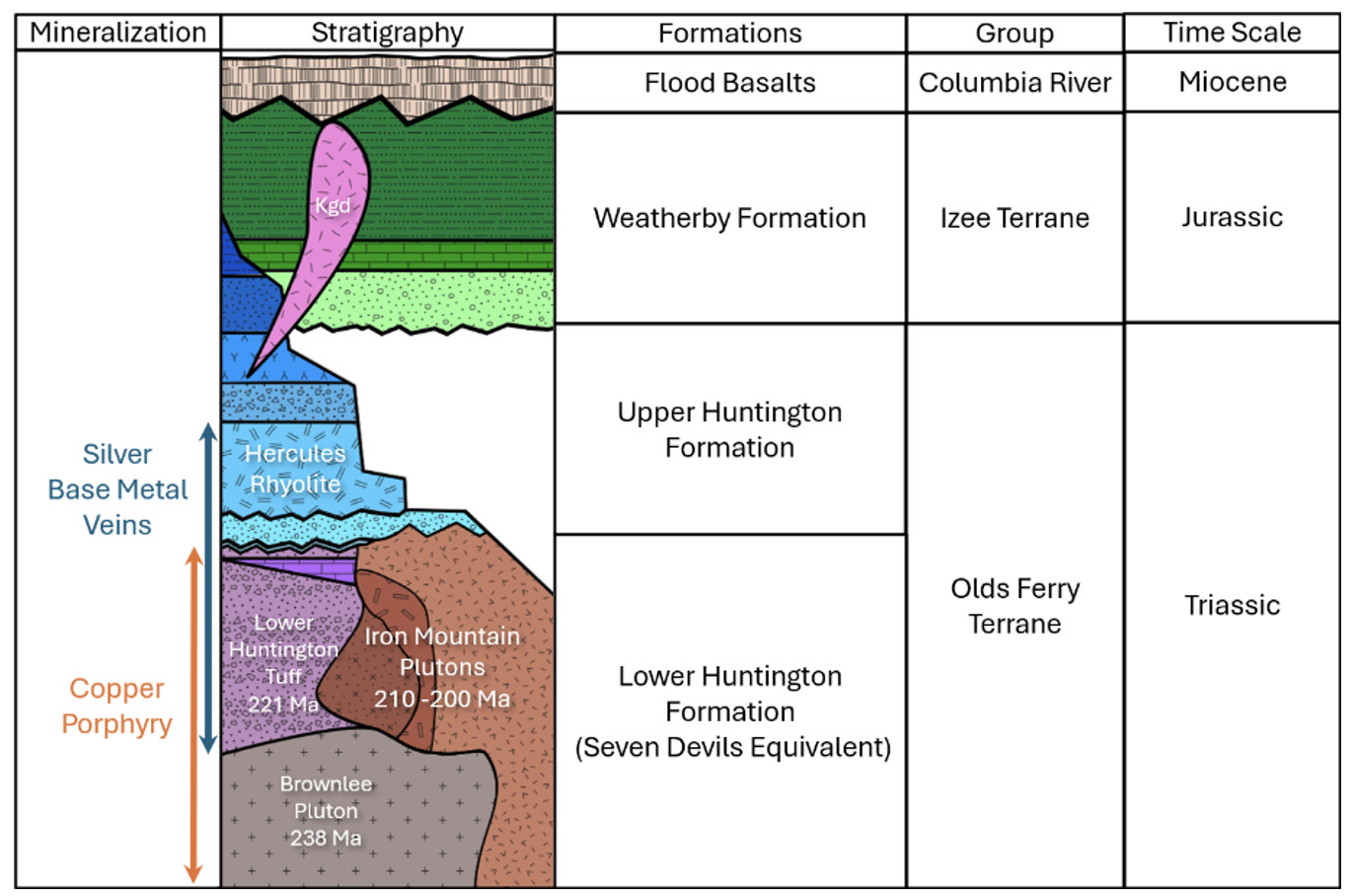
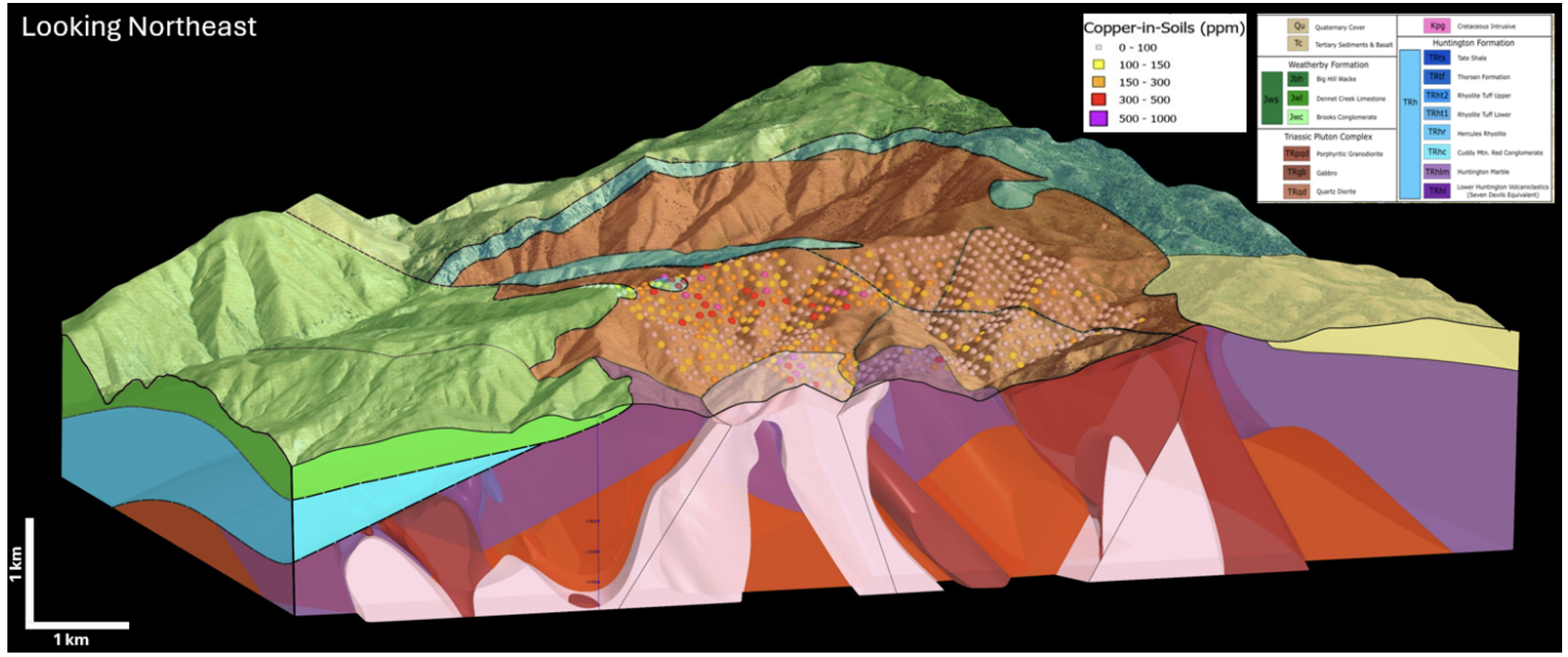
Figure 3 – Stratigraphy of the Hercules Copper Trend. The stratigraphy that is considered the most prospective to host porphyry copper mineralization includes the Lower Huntington Formation (purple) and Triassic age plutons (brown). Silver mineralization is known to be hosted in Upper Huntington Formation (blue), including the Hercules Rhyolite, as well as the underlying (older) stratigraphy.
Geochemical Analysis
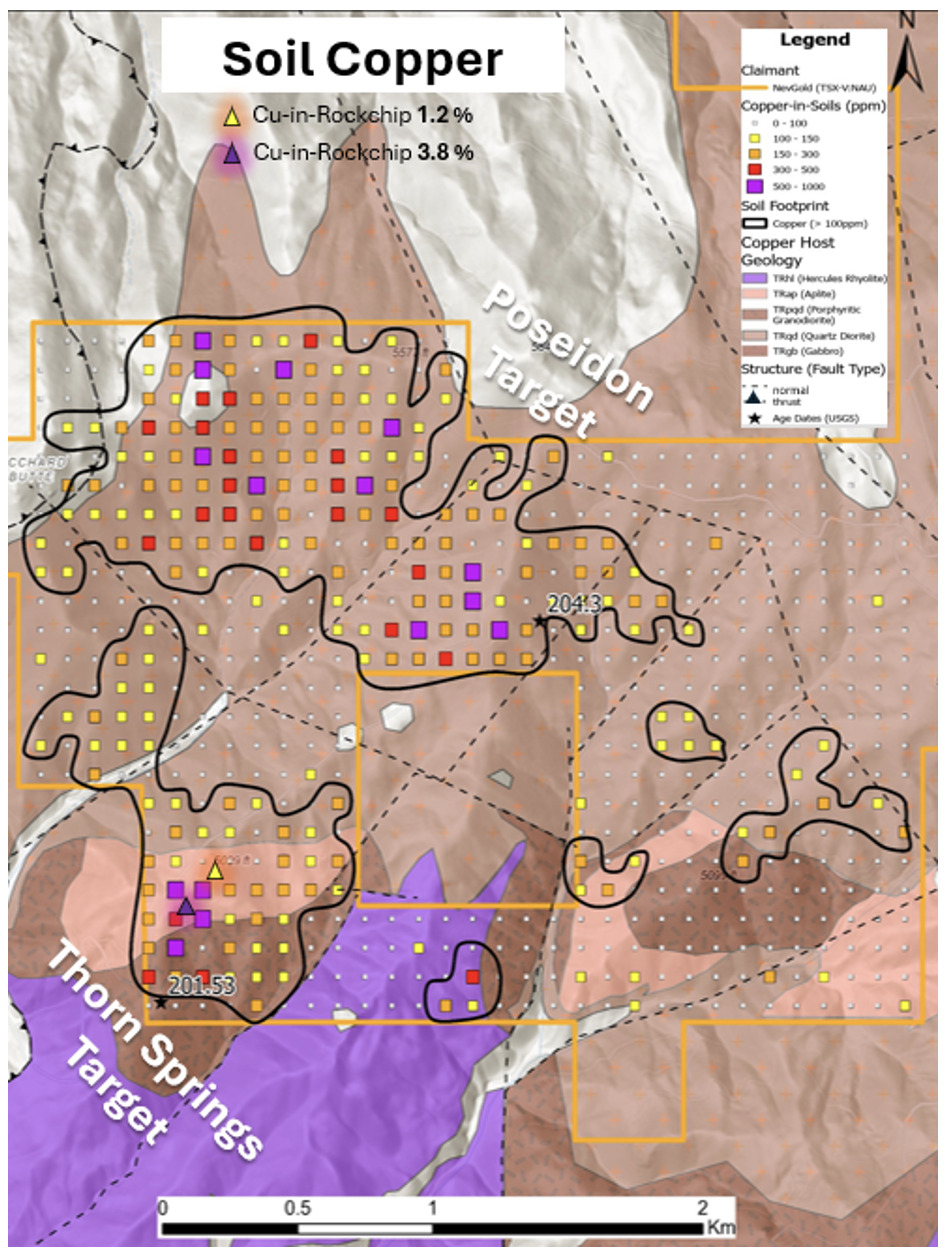
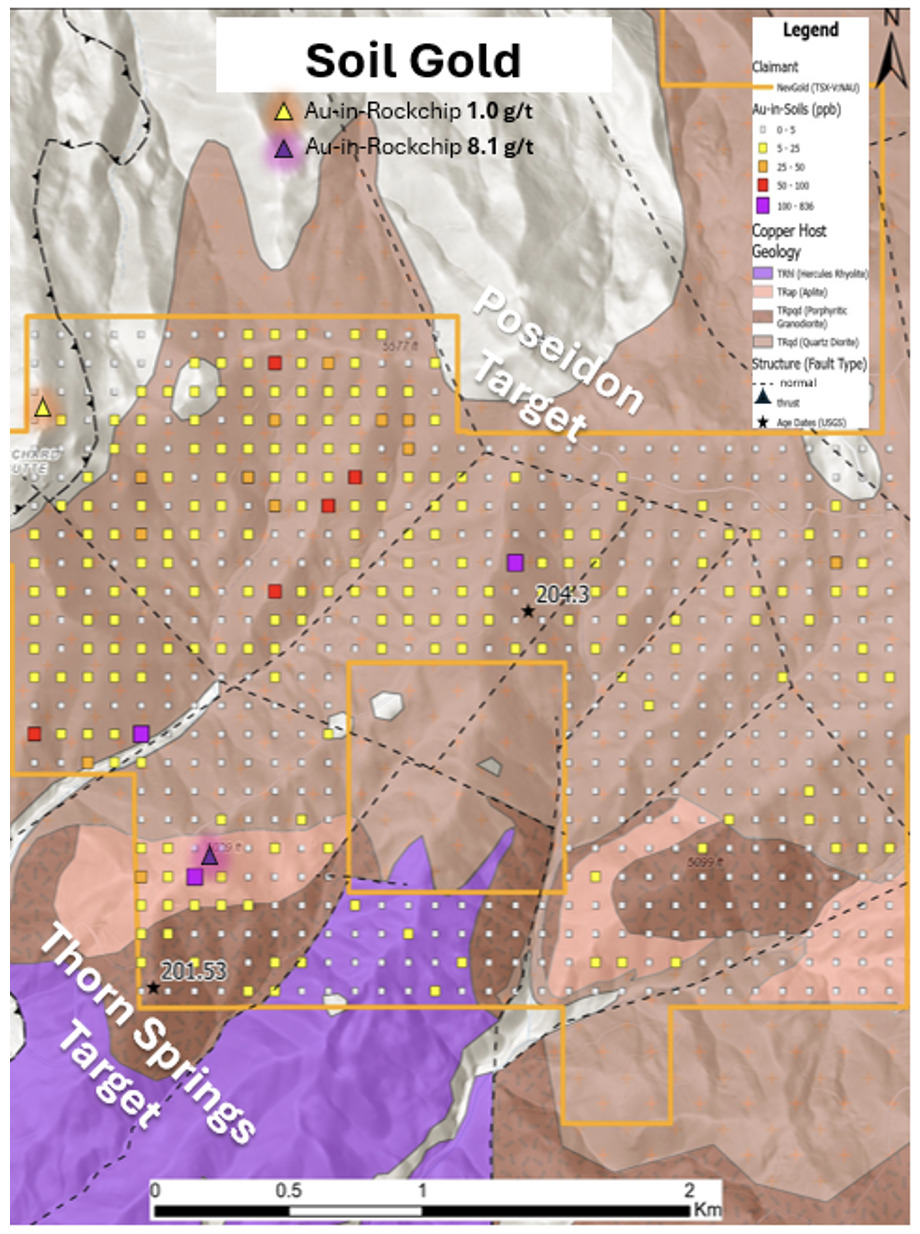
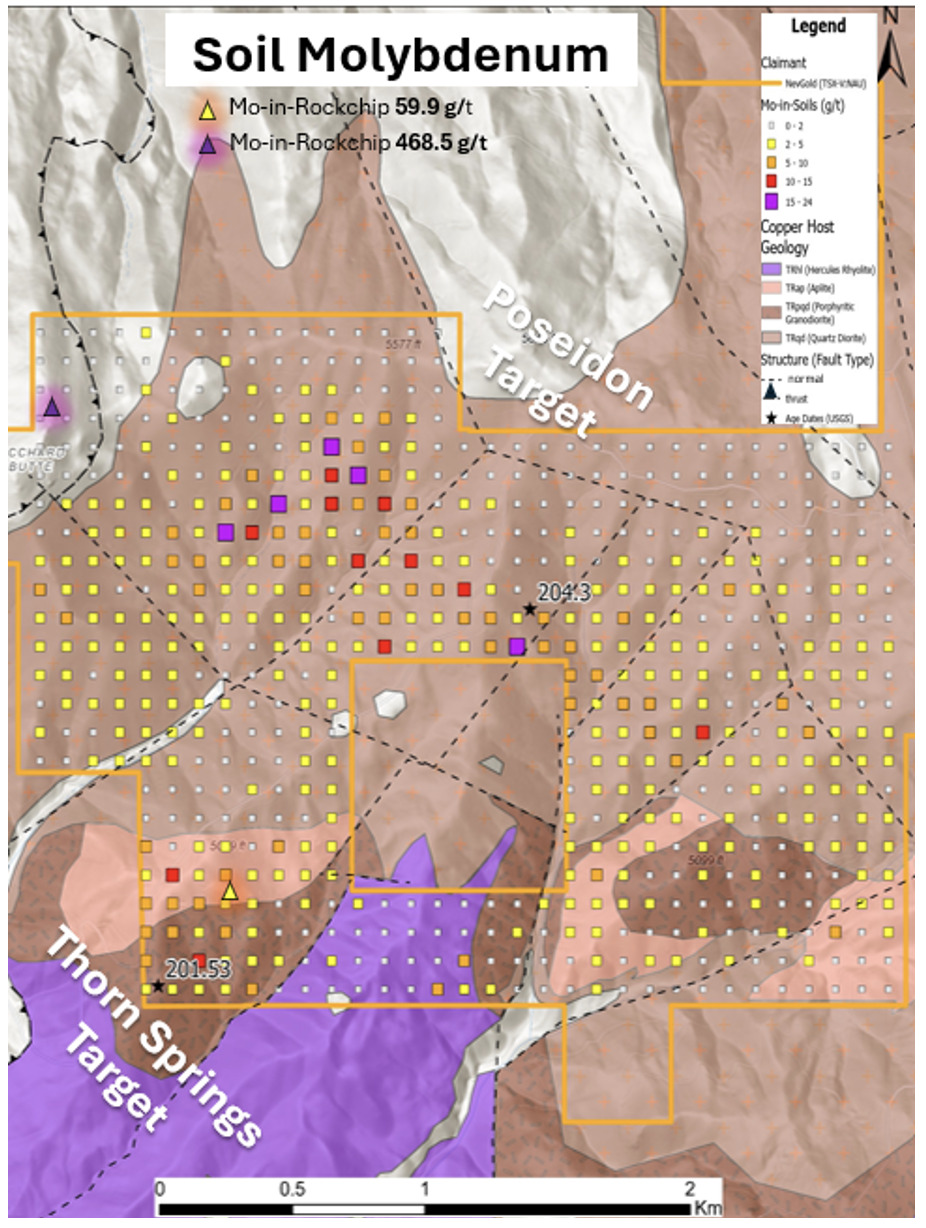
Surface soils to date have outlined a 2.4+ km copper-gold-molybdenum soil geochemical anomaly identified at the Poseidon Target on Bureau of Land Management (“BLM”) ground. Results including samples of 1,000 ppm copper, 183 ppb gold and 23 ppm molybdenum.
Another 1.0+ km copper-gold-molybdenum soil geochemical anomaly was identified at the Thorn Springs Target also on BLM ground. Individual soil samples returned values of up to 720 ppm copper and 886 ppb gold, and 11.5 ppm molybdenum.
These copper, gold and molybdenum soil geochemical anomalies coincide with geological, structural, and surface rock chip targets, highlighting the promising copper porphyry exploration potential at Zeus.
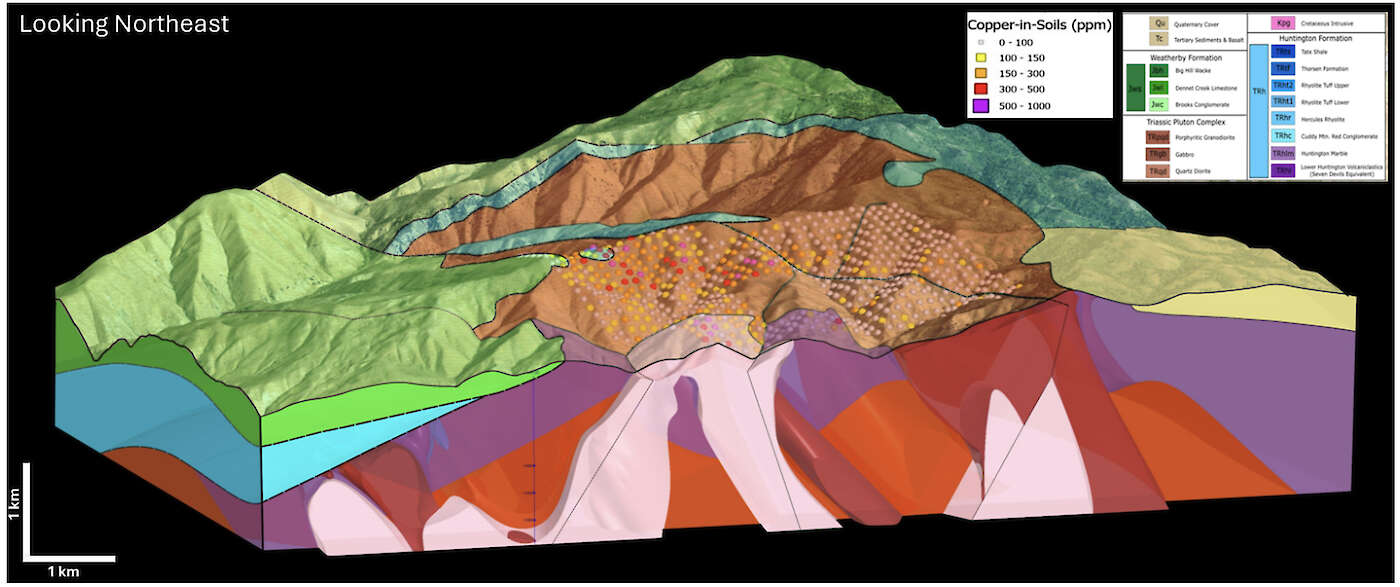
Figure 4 - Geology of NevGold Zeus Copper Project land position. The Zeus claims contain Lower Huntington Formation (purple) and Triassic age plutons (brown), both are known to host copper mineralization on the Hercules Copper Trend. Post-mineral basalts and sediments (tan) cover a significant portion of the Hercules Copper Trend and obscure any potential mineralization. Modified from (Henricksen, 1975), (Fankhauser, 1968), (Skurla, 1974), (Lund, 2021), (Adair, 1985).
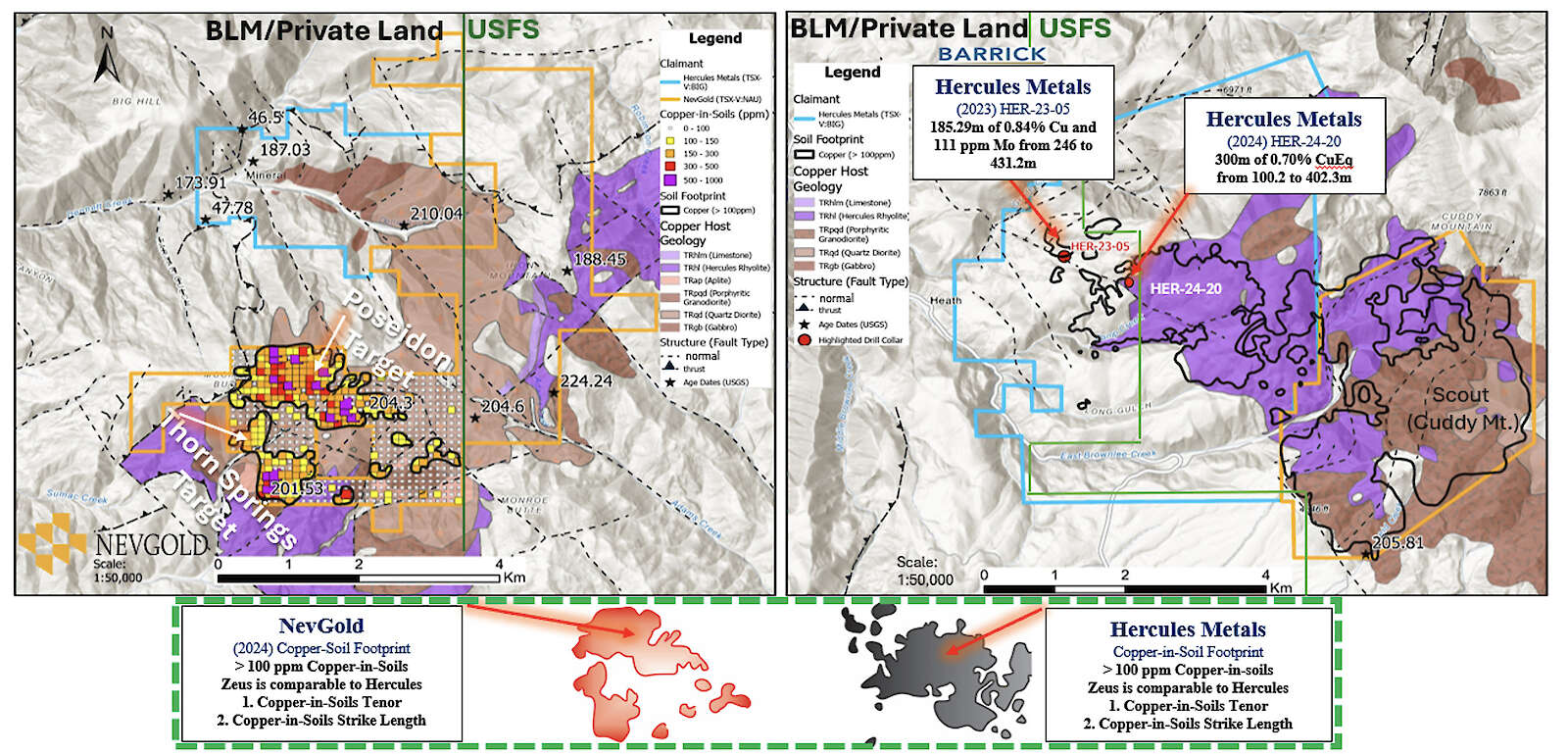
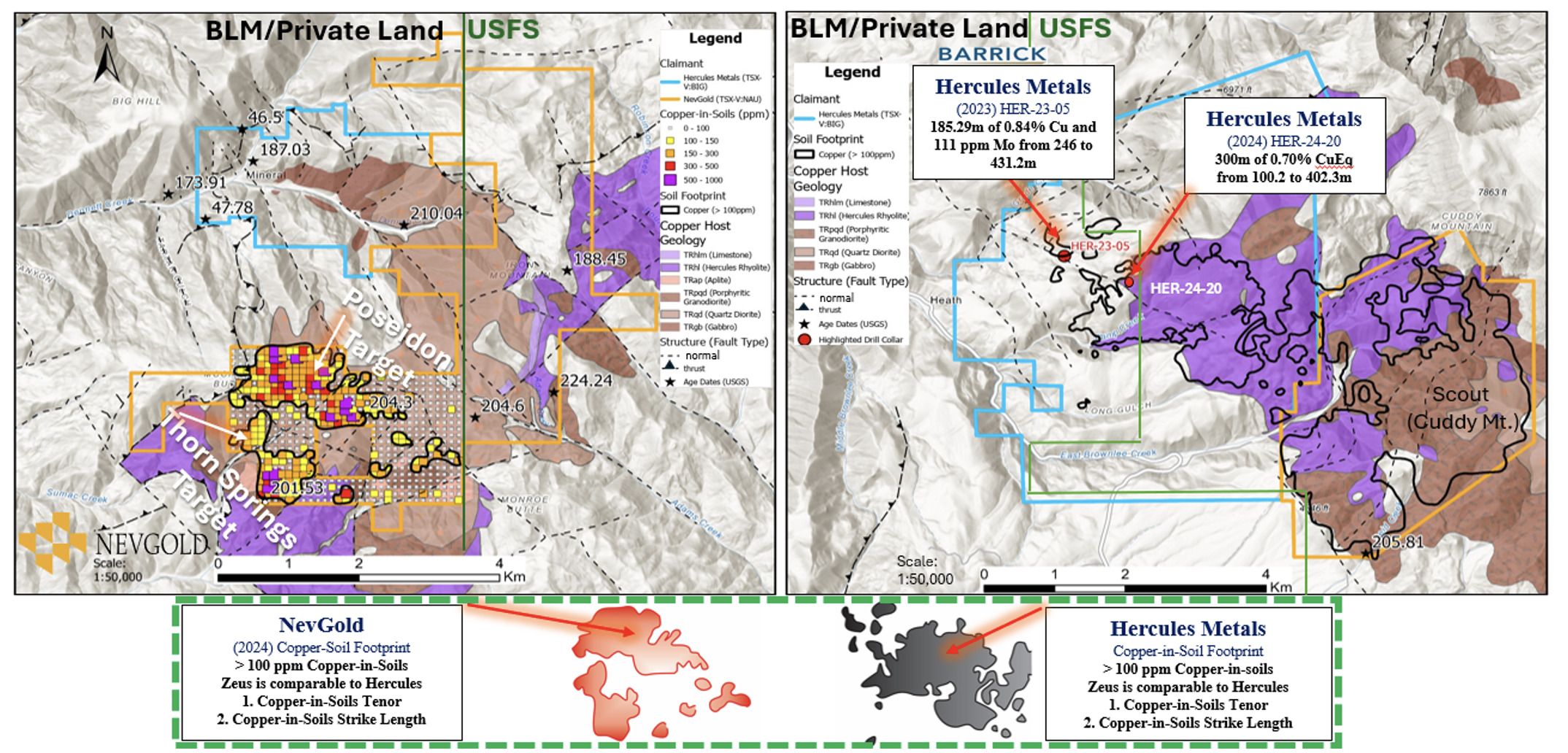
Figure 5 – Copper analysis of Zeus Copper Project and Hercules Copper Project surface soil samples at similar scale. Zones greater than 100 ppm copper-in-soils are outlined in solid black lines. Early Jurassic-aged Upper Huntington Formation (purple polygons) and Late-Triassic-aged intrusive complexes (maroon polygons) are both key copper hosts. A schematic Cu-in-Soils footprint of the Zeus (red) and Hercules (black) Projects is outlined in the green box at the bottom of the Figure.
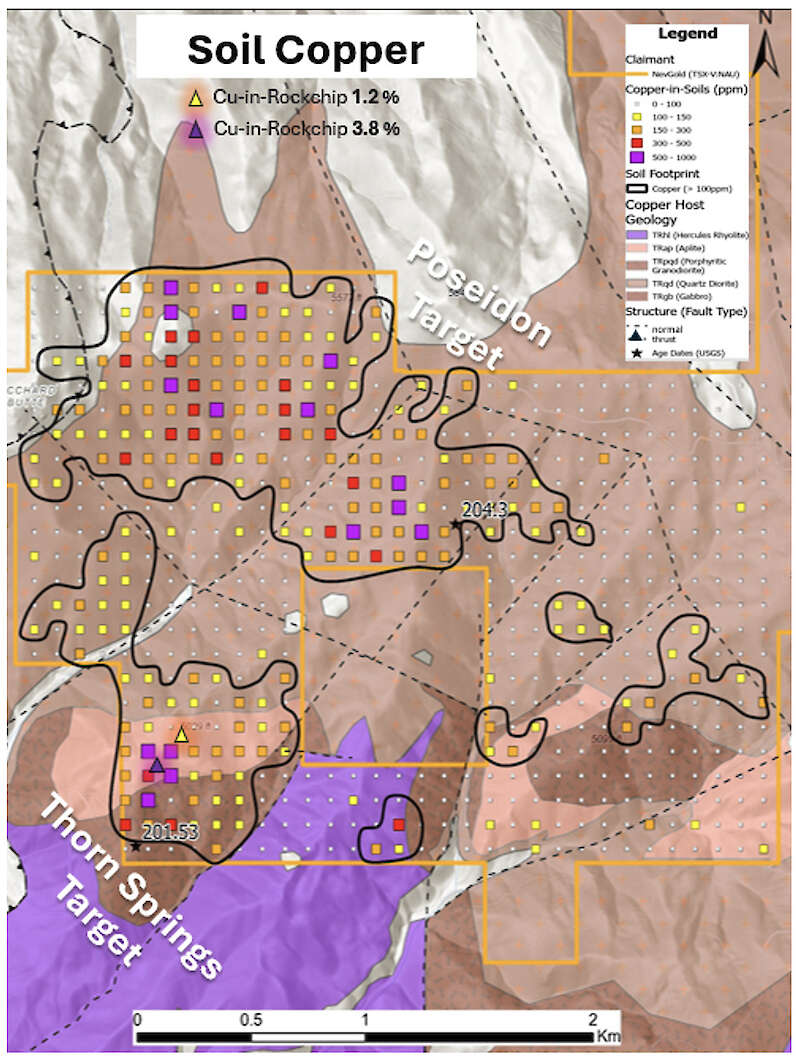
Figure 6 – Copper surface soil geochemical analysis and selected rock chips for the Poseidon and
Thorn Springs target areas within BLM ground at the Zeus Copper Project.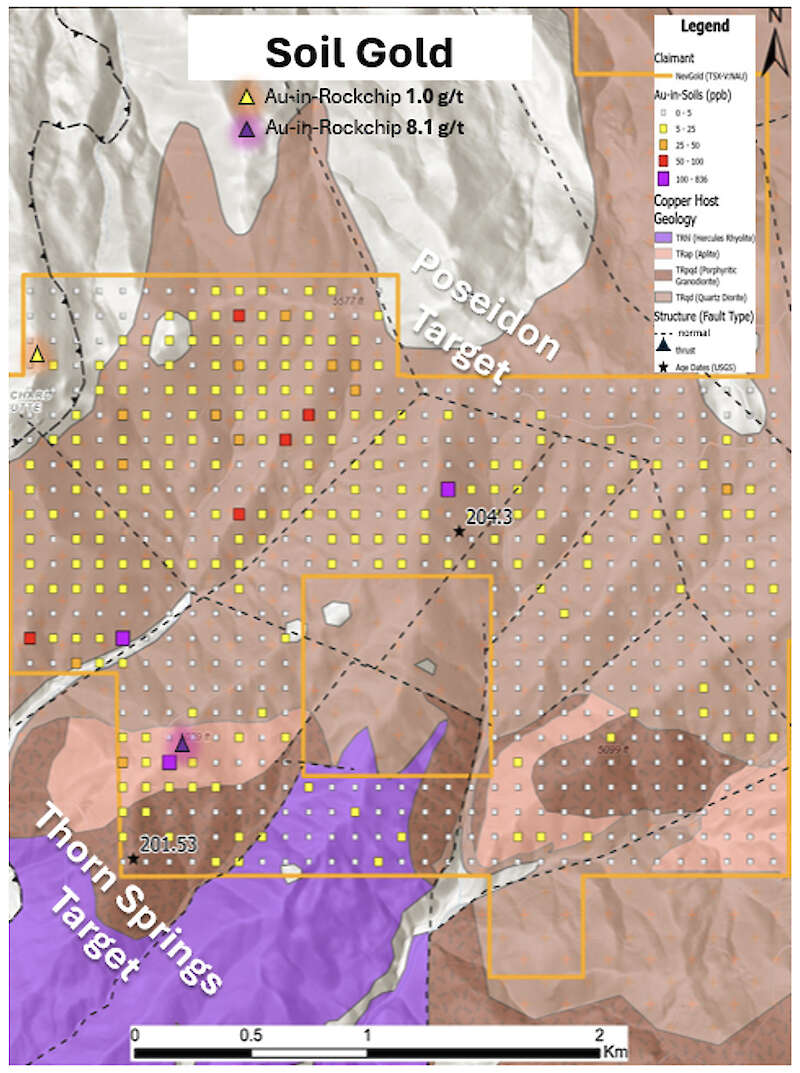
Figure 7 – Gold surface soil geochemical analysis and selected rock chips for the Poseidon and T
horn Springs target areas within BLM ground at the Zeus Copper Project.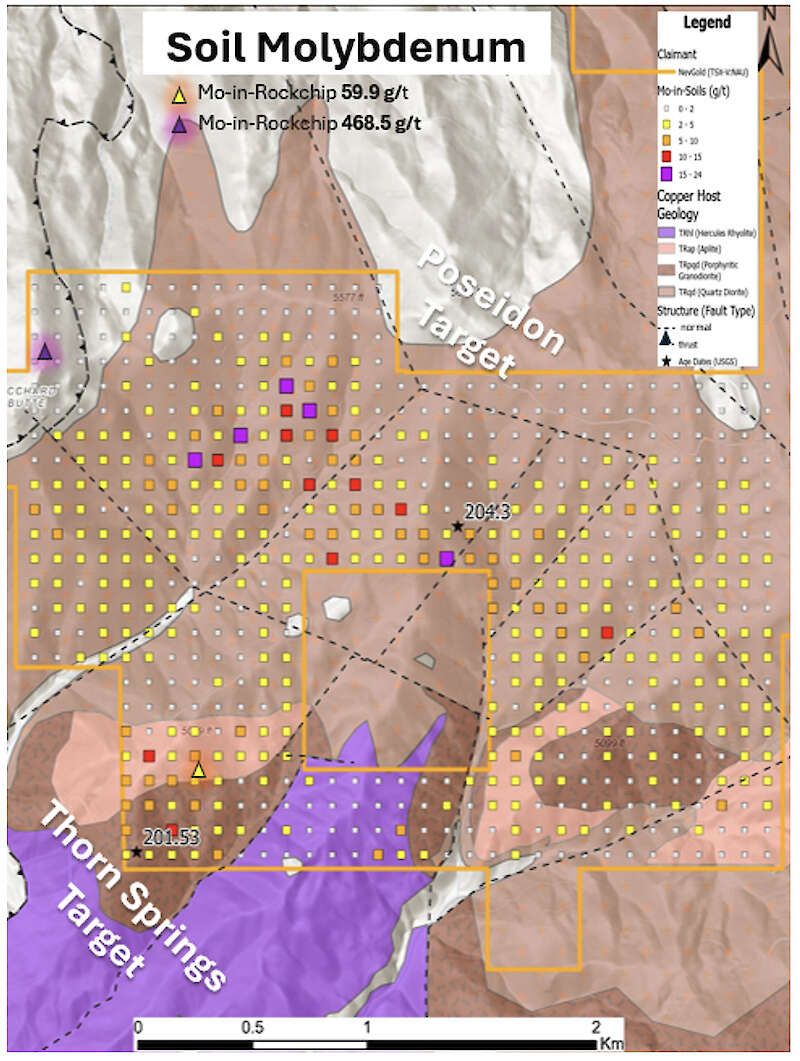
Figure 8 – Molybdenum surface soil geochemical analysis and selected rock chips for the Poseidon and
Thorn Springs target areas within BLM ground at the Zeus Copper Project.
Register to receive news via email from NevGold Corp.
* Required FieldsForm not found